CRIBI Academy Course
AI Agents & Automation
A practical CRIBI Academy course on AI agents, workflow automation, institutional automation, AI assistants, and modern business process orchestration.
Audience
Students, IT teams, administrators, innovators, professionals, developers, and industry teams
Duration
3–4 weeks depending on delivery format
Mode
In-person, hybrid, or online
Certification
Certificate of Participation issued by CRIBI, Kenya Methodist University
Course Overview
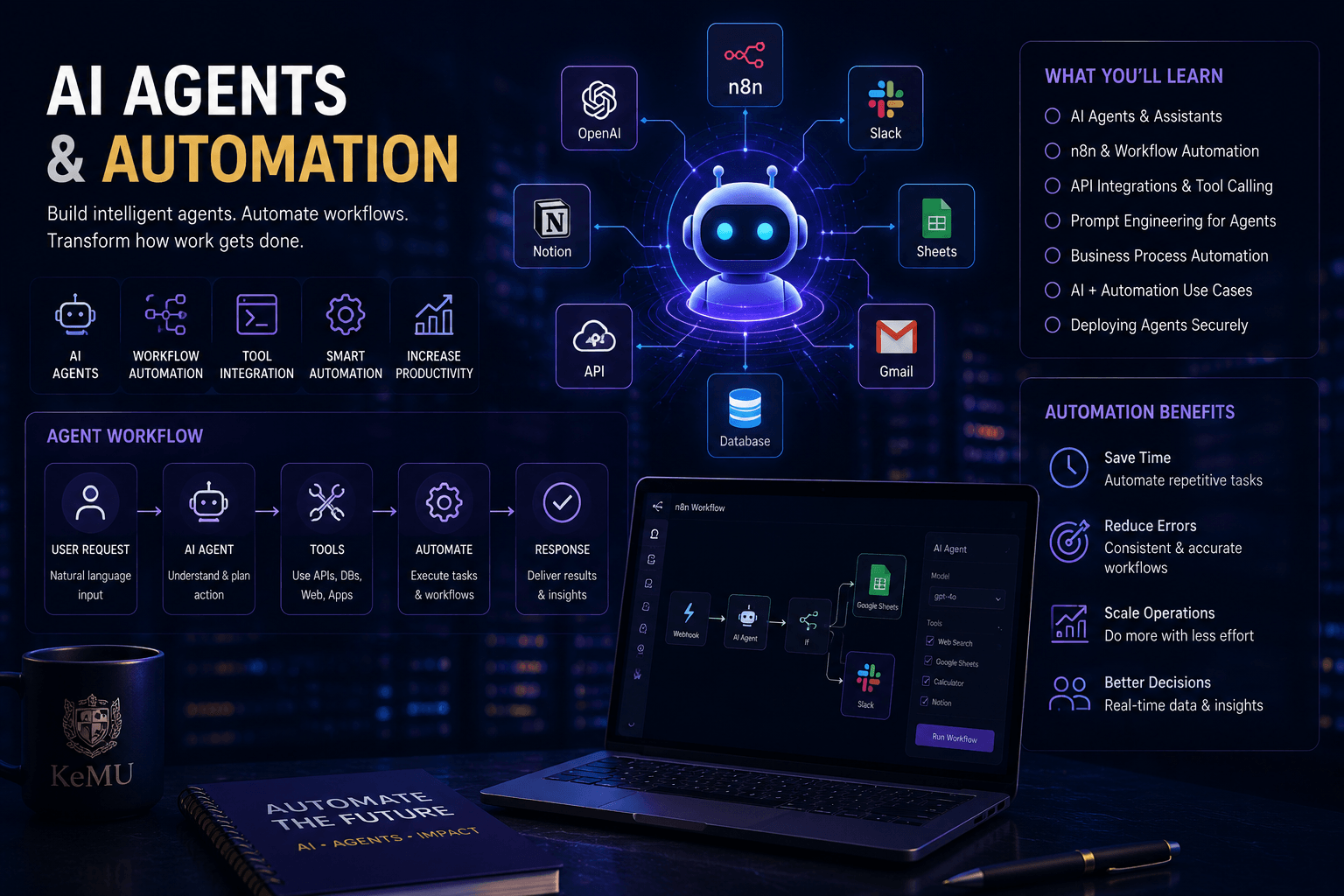
AI agents and workflow automation are transforming how organizations operate, communicate, deliver services, and manage digital processes. This practical CRIBI Academy course introduces participants to modern AI agent systems, automation workflows, tool integration, institutional process automation, and intelligent digital assistants. Participants will explore how AI agents can automate repetitive tasks, coordinate workflows, retrieve information, support decision-making, interact with APIs, and improve organizational productivity. The course introduces practical automation concepts using platforms such as n8n, AI assistants, tool calling systems, workflow orchestration, and AI-powered institutional support systems. The training focuses on practical implementation and real-world organizational use cases including automation of reporting, communication workflows, administrative systems, customer interaction, data processing, knowledge management, and productivity enhancement. Participants will also gain exposure to responsible automation design, governance considerations, security awareness, and scalable automation thinking. By the end of the course, participants will understand how modern organizations are integrating AI-driven workflows into operations, support systems, communication pipelines, analytics, and institutional productivity environments.
Course Preview
Intro video will appear here
This is the public preview position for the instructor welcome, course promise, and learner outcomes. Full videos unlock inside the learner area after enrollment.
Who Should Attend
Learning Outcomes
Tools & Skills Covered
Course Outline
Module 1
Introduction to AI Agents and Intelligent Automation Systems
Module 2
Workflow Automation Fundamentals and Automation Logic
Module 3
n8n and Modern Automation Platforms
Module 4
Tool Calling, APIs, Integrations, and Workflow Triggers
Module 5
Building AI Assistants and Institutional Support Systems
Module 6
Automation for Reporting, Communication, Scheduling, and Productivity
Module 7
AI-Driven Business Process Automation and Organizational Efficiency
Module 8
Responsible Automation, Governance, Security, and Operational Risk
Module 9
Capstone Practical: Build and Demonstrate a Functional AI Workflow
Practice
Labs And Applied Work
Available in the learner area
Lab 1
Introduction to AI Agents and Intelligent Automation Systems
Lab 2
Workflow Automation Fundamentals and Automation Logic
Lab 3
n8n and Modern Automation Platforms
Lab 4
Tool Calling, APIs, Integrations, and Workflow Triggers
Lab 5
Building AI Assistants and Institutional Support Systems
Delivery Assets
Notes, Slides And Downloads
Each CRIBI Academy course is designed to ship with learner notes, instructor slides, lab workbooks, assessment rubrics, handouts, and video scripts. Public visitors see the asset list; approved learners receive the files inside the course area.
Learner notes
Structured reading notes and key concepts for each module
Unlocks after enrollment
Slide deck
Instructor-ready presentation slides for classroom delivery
Unlocks after enrollment
Lab workbook
Step-by-step practical exercises and submission tasks
Unlocks after enrollment
Assessment rubric
Criteria for quizzes, assignments, labs, and capstone review
Unlocks after enrollment
Instructor handouts
Teaching prompts, facilitation notes, and discussion guides
Unlocks after enrollment
Video scripts
Lecture scripts prepared for AI voice or recorded delivery
Unlocks after enrollment
Ready to Join?
Register your interest in this CRIBI Academy short course. The programme can be delivered to students, staff, faculty, industry teams, partner institutions, startups, and professional groups.